
Laser isn’t always the right answer.
Being clear about when it suits and when it doesn’t matters more than selling you a course of sessions.
Often a good fit
Larger or heavily saturated areas of old pigment
Darker pigments that have held their density
Work that needs substantial lightening before anything new
Shapes that sit outside your natural brow line
When we’d suggest otherwise
Very small areas, where saline is often kinder
Certain pigment colours that respond poorly to laser
Skin that needs time to recover before further work
Cases where the result you want can be achieved without removal
What actually happens.
Consultation and patch test
Helen assesses the pigment, its depth and colour, and your skin. A patch test is carried out before any full session so we can see how your skin responds.
The session
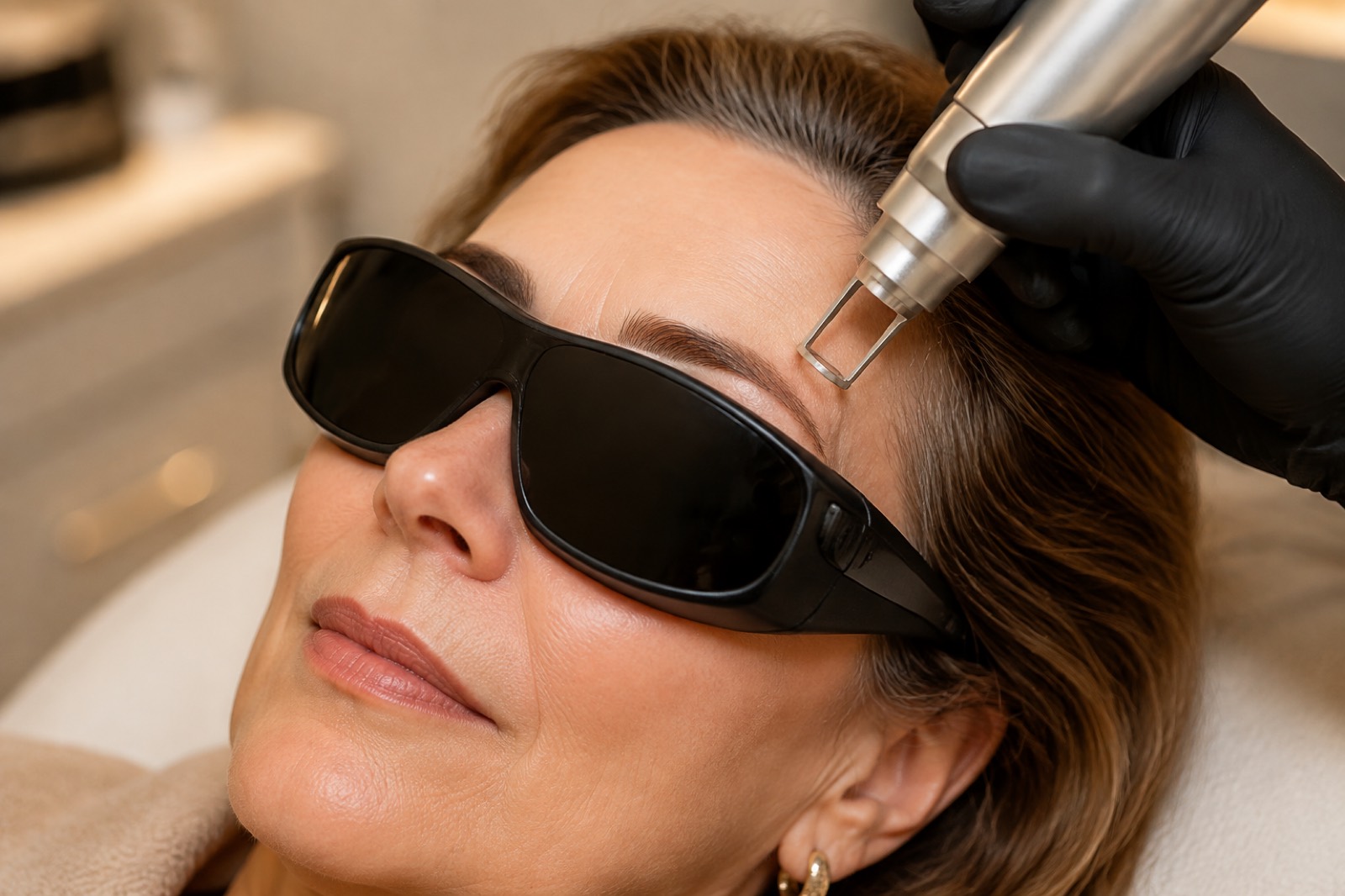
Sessions are short. Most clients describe the sensation as sharp but brief. The area is treated, soothed and dressed before you leave.
Healing
The area will be tender and may scab. Aftercare matters here more than almost anywhere else — picking or premature makeup can affect the result and the skin.
Spacing and sessions
Sessions are spaced several weeks apart to let the body clear the pigment between visits. Helen will tell you honestly how many are likely — and that estimate can change as we see how your skin responds.
Removal is a process, not an appointment. Anyone promising one session is not describing how pigment behaves.
Common questions
The things people most often ask.
How does laser removal of permanent makeup work?
A specialist laser breaks old pigment into tiny particles, which your body then clears away naturally over the following weeks. It works gradually across a series of sessions, and it is the method most often used when there is a lot of pigment to move, such as larger or heavily saturated areas or darker pigments that have held their density.
Does laser removal hurt?
Sessions are short, and most clients describe the sensation as sharp but brief. The area is treated, soothed and dressed before you leave. Afterwards it will be tender and may scab for a few days.
Do I need a patch test?
Yes. Helen carries out a patch test before any full laser session, so she can see how your skin responds. It is part of your consultation and assessment.
Can laser remove every colour of pigment?
No. Laser does not treat every colour equally. Some colours respond poorly, and yellow is the one it struggles with most, which is why some people are left with yellow brows after a course of laser. In those cases saline removal, or Yellow Brow Rescue, is usually the better route, and Helen will tell you honestly if laser is not right for you.
How should I look after my skin after laser removal?
Aftercare matters more here than almost anywhere else. Expect tenderness and possibly scabbing. Do not pick at the area, and avoid makeup on it until Helen says it is safe, because both can affect the result and the skin. You will be given full written aftercare to take home.
Is laser removal available in Manchester?
Laser removal is carried out at the Lytham St Annes clinic. The monthly Manchester clinic offers non-laser (saline) brow removal and Yellow Brow Rescue.

Find out whether laser is right for you.
Bring your existing work to a consultation and Helen will assess it honestly — including telling you if laser is not the right route.
Book Your Complimentary Consultation